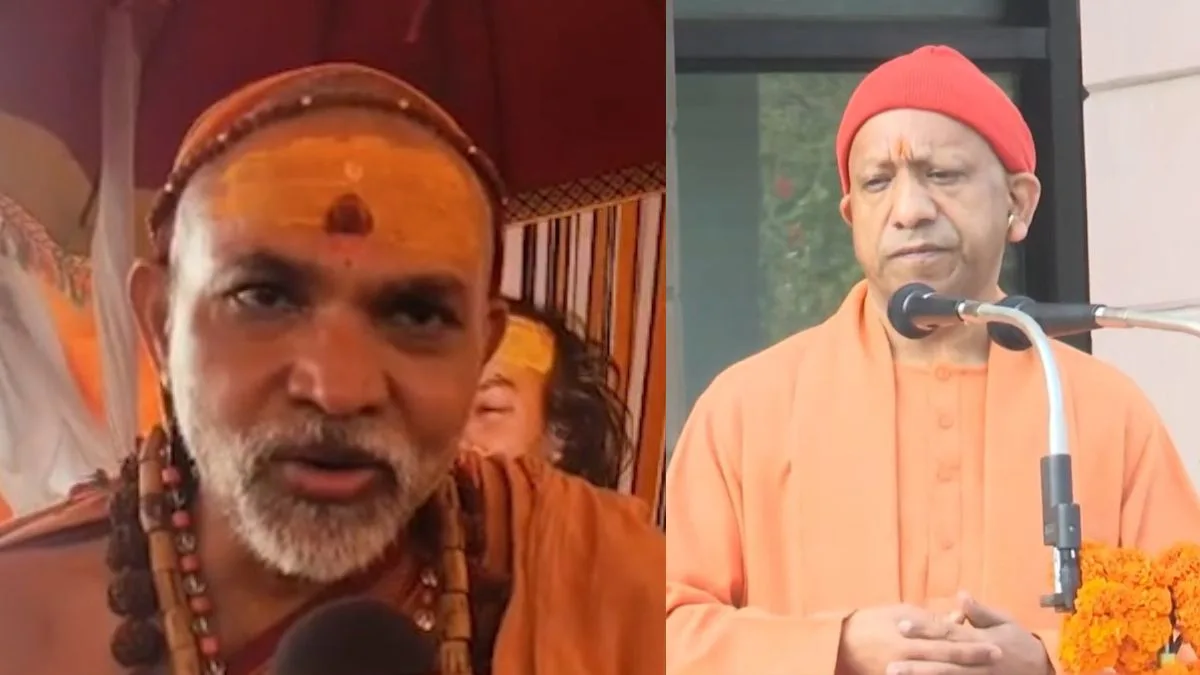
As the dharna led by Shankaracharya Swami Avimukteshwaranand Saraswati in Prayagraj entered its ninth day on Tuesday, Uttar Pradesh Chief Minister Yogi Adityanath appeared increasingly isolated on an issue that has captured political attention across the nation.
Adityanath has stressed that no individual is above the Constitution and underlined the primacy of law, order and democratic principles, but the Shankaracharya continues to be critical of his government, particularly on cow protection and the failure of politicians to honour promises. In a way, the prolonged protest, which could have been resolved with a phone call and an apology, has come to symbolise concerns much to the political benefit of Adityanath’s rivals.
Advertisement
While Deputy Chief Minister Keshav Prasad Mauraya has earned the praise of the sulking Shankaracharya with his words, Delhi’s political corridors are rife with buzz over his colleague, Deputy CM Brajesh Pathak, being a top runner for “something major” in Uttar Pradesh in the seeming succession war within the BJP.
The protest began during the Mauni Amavasya celebrations at the Magh Mela in Prayagraj when Shankaracharya and his followers were stopped by police while proceeding to the Sangam for a holy dip with his ‘palki’. Alleging mistreatment and “insult” by mela administration officials, the seer demanded a formal apology and strict action against those responsible. The issue escalated after Adityanath publicly referred to disruptive forces undermining Sanatan Dharma as “Kaalnemi,” a remark widely interpreted as aimed at the Shankaracharya. The seer responded sharply, calling him the real “Kaalnemi” and accusing the BJP of damaging Hindu traditions.
The controversy, however, exposed underlying divisions within the ruling party, especially after Maurya distanced himself from the CM’s line, emphasising respect for saints and calling for an inquiry into the alleged insult. Several BJP leaders echoed similar sentiments, criticising the administration’s handling of the episode, while some saints also rallied behind Adityanath. But Maurya’s conciliatory approach fuelled speculation about internal discord and also political differences between Lucknow and the party’s top leadership in Delhi.
Notably, no senior BJP leader or party spokesperson seems to have openly defended Adityanath. Though Maurya’s favourable tone was read as an effort by the saffron party to avoid turning the dispute into a bigger political confrontation and attempt to contain damage, observers believe it also reflects underlying differences within the BJP’s power structure.
Analysts warn the controversy may pose electoral risks, particularly ahead of the 2027 Uttar Pradesh Assembly elections, with a potential erosion of 6–10 per cent of hardcore Hindu voters in closely contested seats, harming Adityanath more than the BJP. But electoral behaviour in India is a complex issue. Shankaracharyas may wield moral influence among hardcore groups, but Hindu voting patterns are shaped more by caste, region, and economic factors than by religious directives alone, they add.